Friends of God who pray

Watchers,
Warriors &
Intercessors.

On the macro level, all three pray. On the micro level, their assignments, temperaments, pace, and spiritual disciplines can be very different.

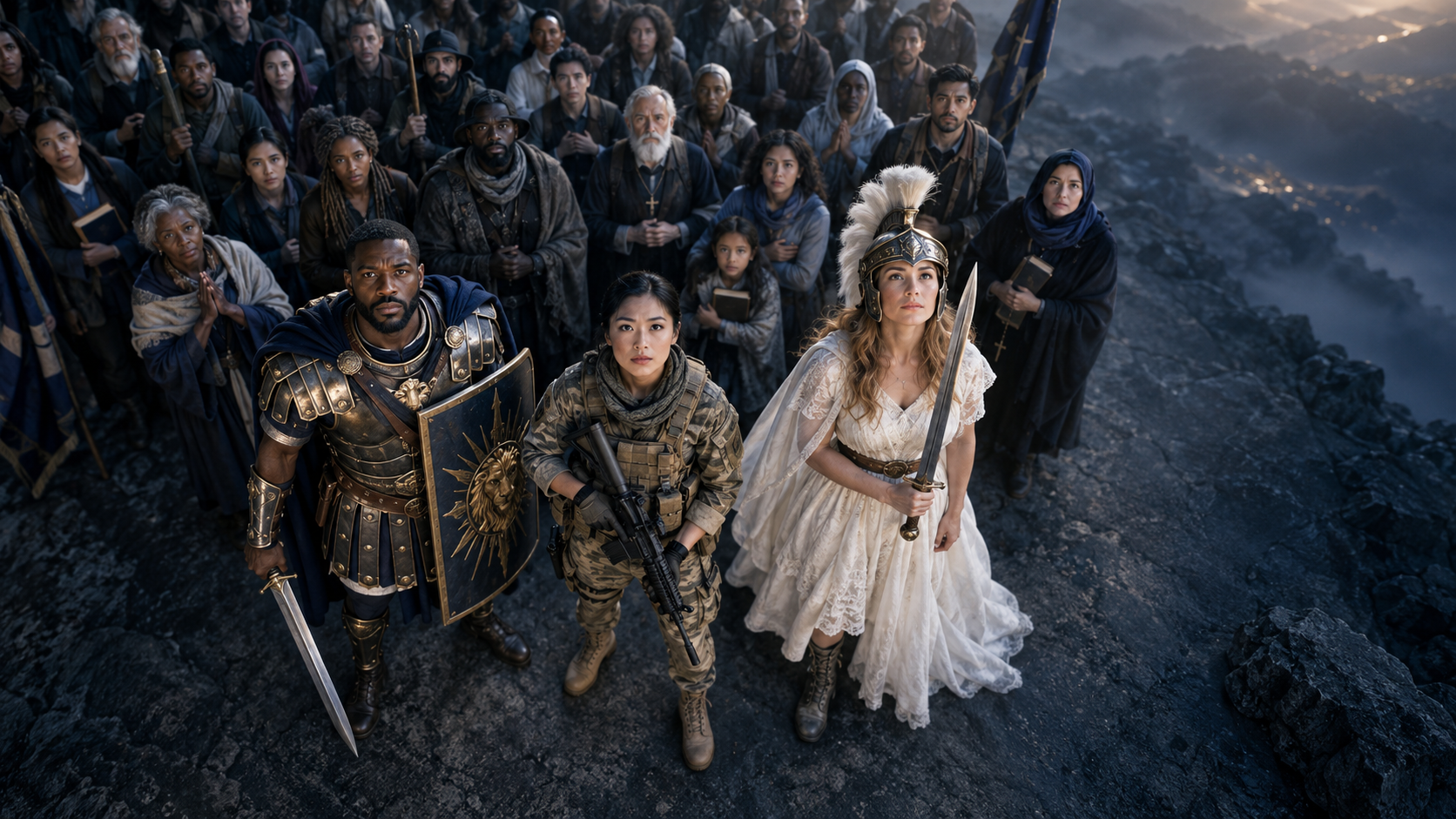
A Black Roman soldier, an Asian modern soldier, and a Caucasian bride in a helmet leading a diverse company of prayer defenders
The question people ask

Are they the same—or are they different?

Many people ask me about the difference between a watcher, a warrior, and an intercessor. Some ask whether a prayer warrior can join Courts of Prayer, whether an intercessor belongs in the group, or whether we consider ourselves watchers.

On the macro level, there may appear to be no difference among these three groups because they are all believers who pray on behalf of others. On the micro level, however, there are real differences. Those differences do not determine who is welcome to pray with us. They help us recognize and appreciate the particular grace, temperament, experience, and responsibility that each person brings.

There is much more that could be said about the uniqueness of these three callings. This teaching is not intended to exhaust the subject. It lays a foundation for understanding how watchers, warriors, and intercessors pray together in Courts of Prayer.

Everyone is welcome

There is a place for every sincere believer who desires to pray.

Everyone is welcome to join Courts of Prayer—even a new believer. A person does not have to carry a particular title or already understand every depth of intercession before praying with us.

At the same time, there are depths of prayer and levels of spiritual warfare that require maturity, discernment, preparation, and covering. Warfare can bring pressure and counterattack. When we believe a person is not yet prepared for a particular depth of warfare, we may shield that person from participating in that aspect of the prayer. This is not rejection or hierarchy. It is pastoral protection while the believer grows in strength, understanding, and spiritual discipline.

Different graces · equal value

There is no hierarchy among the three.

Watchers, warriors, and intercessors are all believers. One may be older in the faith, more experienced, or trained for a particular assignment, but no calling makes one person more important to God than another.

01

Intercessors

Intercessors intercede. They form the broad company of believers who stand before God for other people, the Church, communities, leaders, and nations. In modern military language, they may be compared to the general army: numerous, responsive, and able to serve across many areas.

Intercessors often catch prayer burdens quickly. There are many needs before them, and they can move from one burden to another as the Spirit leads. They frequently help a prayer meeting begin moving because they can recognize a need, receive a burden, communicate it, and begin praying without requiring years of specialization in that one subject.

An intercessor is not necessarily slow or fast. The intercessor’s central responsibility is to stand in the gap and intercede.


The Intercessor represented as a woman in a wedding gown, military helmet and boots, carrying a sword
The Intercessor
02

Warriors

Warriors are intercessors who battle. They do not merely mention a need before God; they enter the conflict of intercession with determination. Using a modern military comparison, they resemble the Marines or other battle-ready forces who can be sent into demanding situations.

Warriors tend to move quickly into the battle. They are resilient, adaptable, and difficult to discourage. They can pray for hours with an intercessor, stand beside a watcher, and adjust themselves to the assignment in front of them. They do not have to specialize in the issue before they are willing to fight through it.

Warriors are valuable because they stay. They pray with you, fight beside you, and continue when prayer becomes difficult. Their strength is spiritual endurance in the heat of intercession.

The Warrior represented as a woman in modern military dress carrying a rifle
The Warrior
03

Watchers

Watchers are intercessors who have become specialized in particular areas of intercession. Every watcher is an intercessor, but not every intercessor is a watcher. A watcher does not simply decide to adopt the name. Watching is commonly a long-term calling and a deeply sacrificial way of life.

Two things especially distinguish watchers: their specialty and the amount of time they give to it. God may assign a watcher one matter, people, territory, institution, or spiritual front, and that watcher may pray over it for fifteen, twenty, or thirty years. Watchers do not merely fight; they press through and prevail.

In a military comparison, watchers resemble special operations personnel. They are brought into sensitive areas that require unusual focus, knowledge, patience, discipline, and persistence.

The Watcher represented as a Black man in full Roman armor carrying a sword and shield
The Watcher
A
A biblical picture of sustained watching

Anna remained before God for decades.

Anna is a powerful picture of the watching life. Luke tells us that her marriage lasted seven years and that she then lived as a widow into old age. She did not depart from the Temple but served God with fasting and prayer night and day. When Jesus was presented, she gave thanks to God and spoke about Him to those who were waiting for the redemption of Jerusalem.

The promise that someone would not die before seeing the Lord’s Christ, and the words “mine eyes have seen thy salvation,” belong specifically to Simeon. Anna’s example is different but equally important: decades of focused fasting, prayer, watchfulness, and expectation concerning Israel’s redemption. Her life displays both marks of a watcher—specific spiritual focus and long duration.

Read Luke 2:25–38.

D
A watcher over a nation and its prophetic future

Daniel understood the times and remained in prayer.

Daniel is another strong example. He studied Jeremiah’s prophecy, understood the timing concerning Jerusalem, and responded with prayer, fasting, confession, and intercession. He was also entrusted with visions concerning kingdoms, conflicts, and events far beyond his own lifetime.

Daniel did not simply receive information. He carried what he received before God. His life demonstrates the watcher’s combination of revelation, historical understanding, national burden, disciplined prayer, and persistence when answers are resisted or delayed.

Read Daniel 9:1–23 and Daniel 10:1–14.

Temperament and pace

We do not all enter a burden in the same way.

Understanding these distinctions is important when watchers, warriors, and intercessors pray together. Their pace, passion, language, and expectations can differ.

Watchers are often slower and more deliberate. They go through the details of events because their passion is caught in those details. The longer someone watches a matter, the more detail that person sees. Explaining those details feeds the watcher’s understanding, temperament, and burden to pray.

An intercessor attending a watcher-led prayer meeting may become bored or wonder why so much explanation is necessary. The watcher is not wasting time; the watcher has lived with the issue and understands how its details shape effective prayer.

Conversely, a watcher attending a prayer meeting led by a general intercessor may feel discouraged because important dimensions appear to be missing. The intercessor is not necessarily shallow. The prayer may simply be broader, more foundational, and less specialized than the watcher’s usual approach.

Warriors are often faster. They hear where the battle is and want to engage it. Their passion rises in the conflict itself. They are often able to move between the broader burden of the intercessor and the specialized burden of the watcher because adaptability is part of their strength.

Why all three are necessary

Courts of Prayer has learned to partner across these differences.

There are watchers, warriors, and intercessors among us. We have learned to recognize one another, make room for one another, and receive what each grace contributes.

Intercessors initiate and circulate burdens.

Intercessors may catch burdens quickly and help the gathering begin praying. They can carry many needs, communicate the burden, and move prayer across people, churches, communities, and nations. They are spiritually versatile—able to respond to many kinds of assignments.

Warriors bring adaptable endurance.

Warriors do not quit easily. They can pray for hours, stand with the intercessor, and continue beside the watcher. They are willing to enter difficult places and remain engaged until the immediate battle has been thoroughly addressed.

Watchers carry difficult matters to completion.

Watchers take the hard, sensitive assignments that others may overlook. They do not merely pray and release them quickly. They remain until they see change, fulfillment, protection, or the completion of what God assigned them to watch.

A life shaped by the watch

For watchers, the assignment often alters everything.

Watchers are not assigned indiscriminately to every place and every issue. They commonly man specific, sensitive areas—places where the enemy is carrying out serious work while much of the Church does not yet recognize what is happening. They watch because they see, and they watch in order to protect the interests of God’s Kingdom through sustained intercession.

Yet watching is not limited to seeing what the devil is doing. A true watcher must remain centered on God. Watchers may perceive activity on three levels: the movements and strategies of the enemy, vulnerable or significant areas affecting God’s people, and—above all—the plans, intentions, warnings, and purposes of God.

This calling can deeply fashion a watcher’s lifestyle. Watchers often fast extensively, pray for long periods, value privacy, and become reclusive at particular times. Many establish a specific room, chair, corner, or altar where they can withdraw, become quiet, and concentrate on the matter they are carrying.

The demands of the watch can also affect relationships and major personal choices. Some watchers remain unmarried after widowhood or divorce; others discover that marriage requires an unusually understanding and supportive spouse. This is an observation, not a doctrine or command. The central point is that a genuine watching assignment does not remain one activity among many—it frequently reshapes time, habits, relationships, priorities, and the entire structure of life.

One company before God

Different functions. Different temperaments. One Kingdom.

Intercessors intercede. Warriors fight in intercession. Watchers specialize, press through, and prevail over time. None is greater than the other, and none should despise the grace of another. When all three understand one another and pray together, the broad army, the battle-ready warriors, and the specialized watchers become one effective company before God.